Diwali: The Indian Festival of Lights and Its Customs
Diwali is the festival of lights. It is celebrated in the fall, and the date changes from year to year. Why does it have no fixed spot on the calendar, unlike some festivals we know well? This article explains when Diwali takes place, how it is celebrated and which elements define the festival of lights. It also looks at who observes Diwali and how it is marked in Germany.
What Is the Festival of Lights, and When Does It Take Place?
The festival of lights is observed in the fall, usually in October or November. Its date follows a lunar calendar, which is why the festival lands on a different day each year. Anyone who wants to attend a Diwali event should check the current date instead of assuming it falls on the same day as the year before.
The celebration lasts five days. So the festival is not limited to a single day on the calendar but spans several days spent among the people closest to you.
Diya and Rangoli: The Signs of the Festival
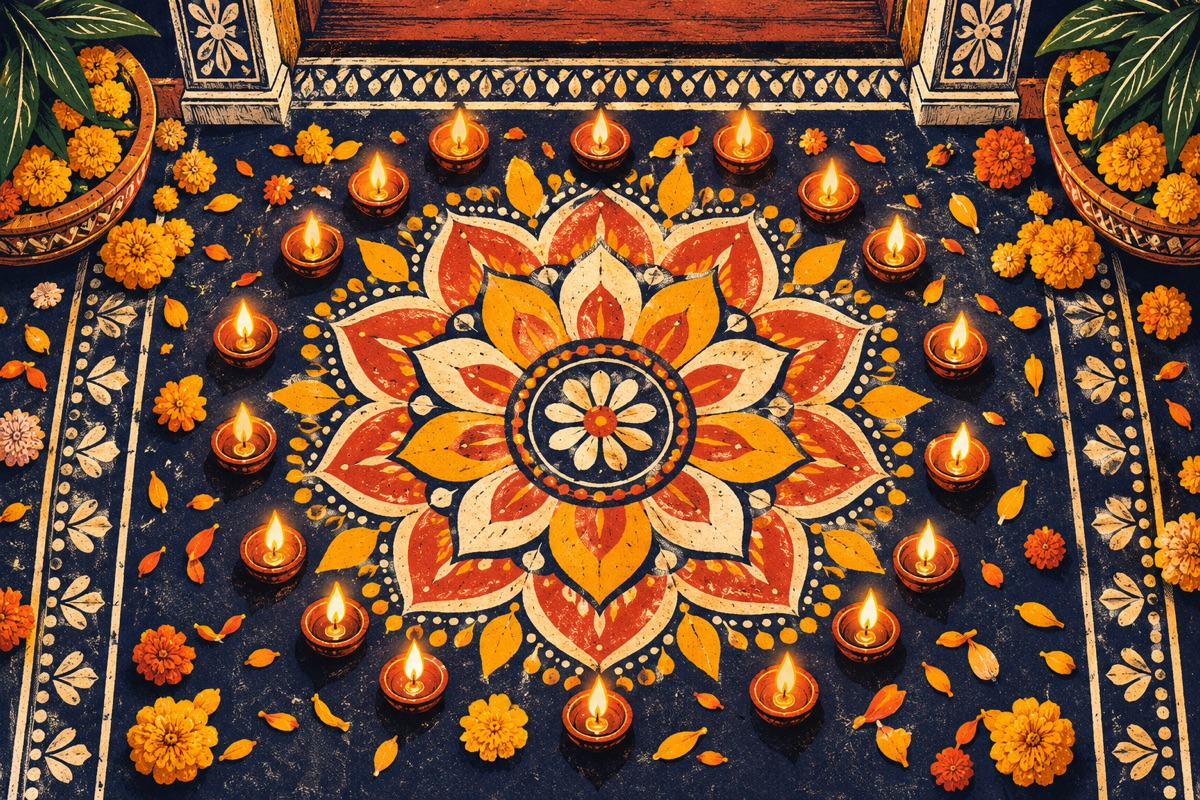
The best-known element is the small oil lamp called a diya. Diyas set the character of the festival of lights, where light takes center stage. A second typical element is rangoli, a decorative pattern of colored powder or chalk at the entrance. Together, diya and rangoli make up the picture most people associate with Diwali. Customs also include sweets handed out to family members and neighbors, which underlines the communal side of the festival. Diwali is therefore not only something to look at but also an occasion for meeting people and for gestures of closeness.
Who Celebrates Diwali?
Diwali is celebrated by Hindus but also by followers of other religions in India. Each of these religious traditions links the festival to its own stories, so it does not mean the same thing to everyone. The lights and the shared celebration may look alike, but different stories can stand behind them. Anyone writing about the festival of lights should therefore make clear which tradition is meant.
Diwali in Germany
In Germany, Diwali is celebrated at home, in temples and at cultural events. Here too the date follows the lunar calendar and does not fall on a fixed day. For anyone interested in Indian culture in Germany, Diwali is a good example of how a tradition lives on far from where it began. A celebration at home, a visit to a temple and a cultural event can all belong to the same festival, even if they are organized differently.
Why These Customs Are Worth Knowing
Basic knowledge helps you grasp the meaning of the lamps, the patterns at the entrance and the sweets handed around. It also makes conversation easier with people who observe the festival, since each tradition attaches its own stories to it. If you know that the festival lasts five days and that its date depends on the lunar calendar, it is easier to see why the date changes every year and why events in Germany do not always take place at the same time.
The festival of lights brings together light, community and customs that are passed down in families.