Classical Indian Music: Raga, Tala and Storytelling Through Gesture
The rhythmic cycle Teental has 16 beats and is among the most common cycles in the Hindustani tradition. It is only one of the building blocks of classical Indian music. Its sound is recognizable after just a few notes, yet the rules behind it remain a puzzle to many listeners. What is this music based on, and how does it relate to classical dance? The answer lies in two terms: raga and tala.
Raga and Tala: The Basics
A raga is a principle for building melodies that is tied to a particular time of day and mood. A tala is a rhythmic cycle that organizes the timing of a piece. Raga and tala form the frame in which the musician moves. Teental shows how concrete such a cycle can be: its 16 beats give the playing a clear structure.
Classical Indian music rests largely on improvisation, but it follows the rules of the raga while doing so. The melody does not unfold arbitrarily but within that frame. Musical freedom therefore has clear limits. A concert usually opens with a slow, free introduction to the raga. Only then does the rhythm come in. First comes the mood, then the pulse.
Instruments and Two Traditions
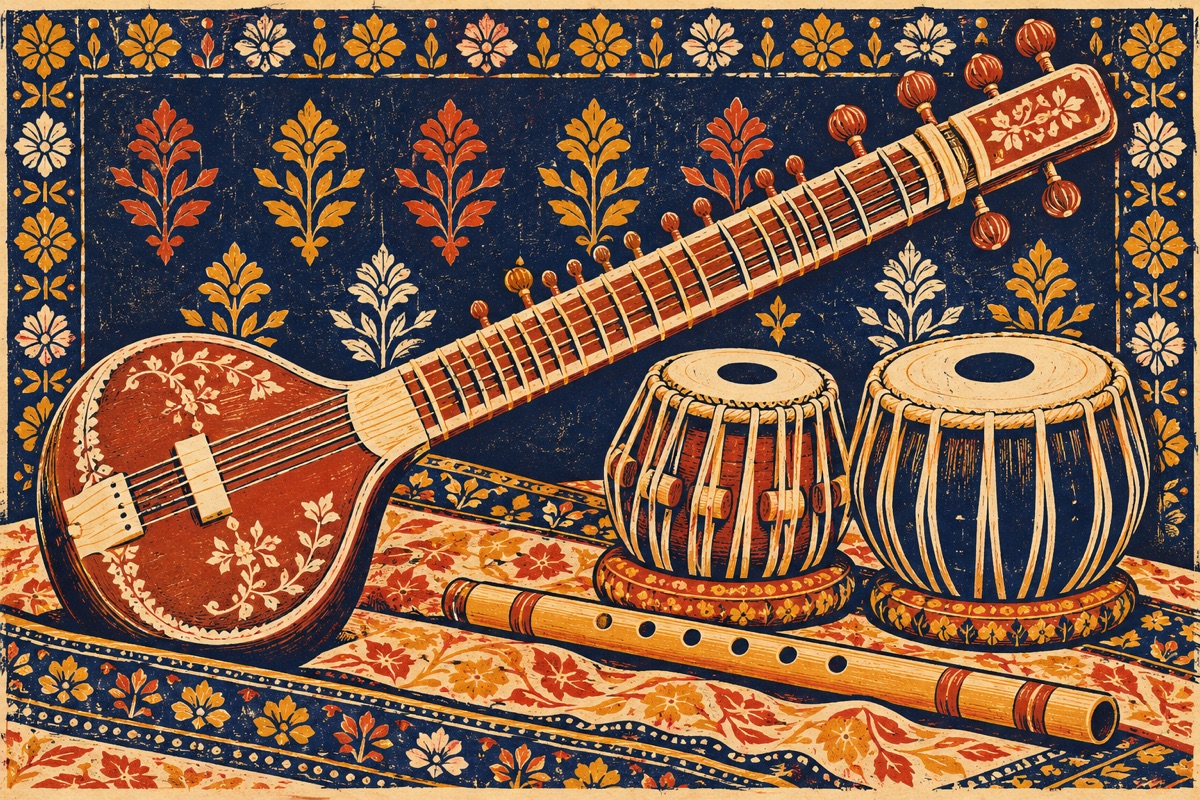
Typical instruments are the sitar, tabla, sarod and the bansuri flute. The sitar is a plucked string instrument with a long neck. Some of its strings resonate without being plucked themselves. The tabla is a pair of drums. In this music the tala sets the rhythmic frame.
The two great traditions are Hindustani music in the north and Carnatic music in the south. Both draw on raga and tala but developed in different regions of the country. This geographic split shows up in classical dance as well.
Bharatanatyam and Kathak: Dance as Storytelling
Classical dance tells stories through hand gestures, known as mudras, and facial expression. Bharatanatyam is a classical dance of southern India. Kathak comes from the north and is known for its fast spins and footwork. The name Kathak is related to the word katha, which means "story." That suits the character of this dance well.
The classical dances are shaped by ideas from the Natyashastra, an ancient treatise traditionally attributed to Bharata. It describes the performing arts, including theater, dance and music. In this way music, gesture and rhythm can be understood as parts of one shared stage tradition. Like classical music, classical dance tells its story by clear rules.
Conclusion
The raga gives the melody its mood, the tala orders the rhythm, and classical dance turns it into a story. Anyone who knows these basics hears classical Indian music as more than an exotic sound and also recognizes the interplay of music and dance in Bharatanatyam or Kathak. Raga and tala remain the key to this tradition.